It’s time for another three reviews from my Instagram.
Eley Williams, The Liar’s Dictionary (2020)
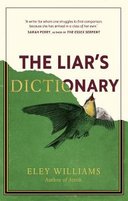
I’ve heard a lot of praise for Eley Williams’ story collection Attrib. over the last couple of years, but haven’t got around to reading it. So I had high hopes for her debut novel, The Liar’s Dictionary, but didn’t quite know what to expect.
What I found is a joyous celebration of language. Here, for example, is one character trying to identify a bird:
He pored over zoological catalogues and pawed through illustrated guides but for all he was able to glean about various small birds’ feeding habits, migratory patterns, taxonomies, use of ants to clean their feathers, use and misuse in mythology and folklore, prominence on menus and milliners’ manifests, &c., &c., its species remained a mystery. Basically, it was a sparrow with access to theatrical costumiers.
The music of Williams’ writing is all its own. If you’re interested in words and wordplay, I would recommend The Liar’s Dictionary on its prose style alone.
But there’s more than that. The novel revolves around Swansby’s Encyclopaedic Dictionary, a grand yet incomplete work that has been in existence for over a hundred years. We follow two main characters: the first is Mallory, an intern in the present day, when it’s just her and old David Swansby left, and there are plans to digitise and update the existing entries. The second protagonist is Peter Winceworth, a lexicographer who works at the dictionary in its Victorian heyday, and often finds himself overlooked.
The two characters are (unknowingly) brought together by mountweazels: false dictionary entries such as “skipsty (v.) The act of taking steps two at a time”. Peter inserts them in the dictionary for his own amusement, and Mallory is tasked with weeding them out. For both characters, working with mountweazels creates an outside space that gives them a greater sense of belonging. For Peter, it’s a chance to leave his mark on the dictionary when others tend to ignore him. Mallory gains the confidence to come out to the rest of the world and not just to her girlfriend. Williams explores how words can shape and reshape ourselves.
Published by William Heinemann.
Robert Perišić, No-Signal Area (2015)
Translated from the Croatian by Ellen Elias-Bursać, 2020

This is the first title in a new line of translated fiction published in the UK by the US publisher Seven Stories Press. It begins with cousins Oleg and Nikola arriving in the remote town of N., somewhere in the former Yugoslavia. They’ve come to revive an old factory that manufactures an obsolete model of turbine, so they can sell a couple to an overseas buyer.
The pair recruit Sobotka, the chief engineer from the factory, to work with them. Gradually the old workers return, and Oleg and Nikola (who aren’t all that business-minded) leave them to manage themselves. The factory becomes poised between the past and the future, socialism and capitalism. As the novel’s title suggests, this place is something of a world apart, where outside influences reach only haphazardly.
As No-Signal Area progresses, it spirals out into telling the histories of Oleg, Nikola and the factory workers, turning into a complex tapestry of story.
Angela Makholwa, The Blessed Girl (2017)
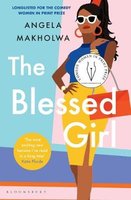
Bontle is a twentysomething woman (don’t ask her what number the “something” is) with her own hair extension business. Thanks to the government’s Black Economic Empowerment policy (brought in to redress the effects of apartheid), she is now also trying her hand at running a construction business, though it’s not as straightforward as she thought.
Bontle might seem to have it all: looks, the trappings of wealth, a large social media following, her pick of suitors… She is indeed blessed. “Blessed” in this context (according to the novel’s epigraph) is a South African term that means Bontle’s lifestyle is sponsored by wealthy older men in return for a relationship. She has several “blessers” in her life, and it all gets rather complicated…
I heard about Angela Makholwa’s novel because it has been shortlisted for the Comedy Women in Print Prize, and it is indeed very funny. There’s also an undercurrent of sadness, the sense that Bontle is using her fancy lifestyle and breezy language as a form of displacement. This sense grows more and more pronounced as the book progresses and Bontle is forced to confront the past. It’s a really effective ending to an enjoyable book.
Published in the UK by Bloomsbury.
 Anyone who follows Adam Roberts on Twitter will know of his penchant for puns, which are always excellent, and never induce groans at all – honest, guv. (Thought I’d indulge in some irony, there.) And anyone who’s followed Roberts’s bibliography over the years will know that his sense of humour has found a home in his fiction, most obviously in the series of parodies he has written alongside his more serious SF novels. The first of these parodies, The Soddit, has recently been reissued (there was even a film to mark the occasion, or something), and I agreed to review it. What did I let myself in for?
 Maria Semple, Where’d You Go, Bernadette (2012)
 Matt Delito, Confessions of a Police Constable (2013)


 Yellow Blue Tibia was the very first book I reviewed on this blog. I was wanting to catch up on some of the contemporary sf authors I hadn’t read, and my first Adam Roberts novel just blew me away. My second, New Model Army, did the same the year after – a novel that I can genuinely say did something I hadn’t come across in a book before. I can’t choose one of these books over the other for this list, so here they both are.


 Penguin have reissued all eight Adrian Mole books in new editions to mark the anniversary, and it has been interesting to revisit some of them. Certainly The Secret Diary remains a beautifully-crafted comic gem, and its 1984 sequel, The Growing Pains of Adrian Mole (which begins the day after the first novel ends), is much the same. Through the pages of his diary, we meet Adrian Mole: convinced he is an intellectual, obsessed over the spot on his chin, with a crush on the lovely Pandora Braithwaite; yet unaware of how bad his poetry is, and oblivious to the signs of his parents’ marital turmoil.
 In 2009’s The Prostrate Years, Adrian Mole is thirty-nine; living with his wife and young daughter, in a converted pigsty next door to his parents – though his marriage is under strain, and the future of the second-hand bookshop where Adrian works is uncertain. His key character traits are the same as ever, but there’s a bitter sting in that, now, Adrian is trying his best to ignore the signs of prostate cancer. He’s a sympathetic character once again, because of the sense that he is trying to hold on to himself and his life in the face of all that’s happening; the single word ‘treatment’ in many entries gains its force from how much is obviously being left unsaid by this character who has always been so open. The dramatic irony of Mole’s asides carries more bite here than in the earliest books (‘It is good to know that whatever travails we may suffer in life, Woolworths will always be there’), and it serves as a reminder that none of us knows what may be around the corner.
 He may be best known as a novelist, but China Miéville’s short fiction is worthy of attention, too. Reading the stories collected in Looking for Jake, I feel as though I’ve gained a fresh understanding of his concerns as a writer. Miéville has often used the term “weird fiction” in conjunction with his work, and a good number of the tales here exhibit what is for me one of the key characteristics of that type of fiction – namely, the paranoid sense that the skin of reality is as thin as a soap bubble and that, if you’re not careful, you’ll discover what’s hiding beyond.
 Okay, so it took eighteen months between my
  Nesbø is being trumpeted asthe latest Big Thing in Scandinavian crime fiction, so I thought I’d check his work out by going back to the first of his Harry Hole mysteries to be translated into English (though actually the third in the series overall; the translation, I should say, is some fine work by Don Bartlett). Detective (later Inspector) Harry Hole is on the trail of a Märklin rifle (‘the ultimate professional murder weapon’) which is reported to have been smuggled into Norway; unbeknownst to him (the reader is privy to some, though not all, of the villain’s story) an old Nazi sympathiser, dying of cancer, has some unfinished business.
 I’ve never watched the Jeeves and Wooster TV series, but even so, it was hard not to imagine the voices of Fry and Laurie whilst reading this. Jeeves and the Feudal Spirit sees Berte Wooster having to contend with a threat from one G. D’Arcy ‘Stilton’ Cheesewright to break his spine in four places (because Cheesewright’s fiancée has left him for Bertie, even though Wooster wasn’t keen), and his Aunt Dahlia’s desperation to keep her husband from finding out that she pawned her pearl necklace to raise funds, and replaced it with a string of imitation pearls.
Recent Comments