Tag: Agota Kristof

Hungarian Lit Month: I Don’t Care by Ágota Kristóf (tr. Chris Andrews)

After an extended break, I’m making another attempt at getting back into blogging at least semi-regularly. Maybe it will only be for specific occasions, or a couple of times a month, or maybe longer – let’s see.

Stu at Winstondad’s Blog is hosting a Hungarian Literature Month this February. I’ve decided to revisit Ágota Kristóf, who escaped from Hungary to Switzerland in 1956 at the age of 21, when the Hungarian Revolution was suppressed, and subsequently wrote in French. I have previously written about Kristóf’s Notebook trilogy (see here and here). Today I’m looking at I Don’t Care, a story collection originally published in 2004, and now issued as part of the Penguin International Writers series in Chris Andrews’ translation.

When I read Kristóf’s trilogy, I was struck by how austere the writing seemed, flattening out details of place and time – and yet how deeply felt it still was. That impression remained with this story collection: the title I Don’t Care seems very much ironic to me.

For example, ‘The Invitation’ consists largely of a husband’s dialogue as he enthuses over throwing a birthday party for his wife, Madeleine, despite her being clear that she he doesn’t want one. After the party, the friends have left, the husband is asleep, and Madeleine is left to clear things away. The piece ends on a simple statement: “she goes to the bathroom and takes a long look at herself in the mirror.” But there’s such a weight of unspoken emotion behind that statement, coming as it does after we’ve seen Madeleine crowded out of her own story and life.

Reality itself can seem to shift when mediated through Kristóf’s prose. ‘The House’ begins with a ten-year-old boy aghast at the thought of anyone moving away: “You can’t do that, leave one house for another; it’s terrible, like if someone got killed.” A few years later, though, the boy has moved house himself. He goes back to visit the old place, but feels betrayed when he finds that someone else has moved in. Time then races ahead in the story, with the boy never quite able to recapture the sense of connection he had with the house. By story’s end, in an uncertain time and place, the boy is an old man revisiting the house, or maybe he’s the ten-year-old yet to leave. Beating underneath it all is the longing to keep hold of the past.

‘Wrong Numbers’ encapsulates my experience of reading Kristóf’s stories. Its protagonist often finds people dialling his number by mistake. He tells of one occasion when he received a call from a woman meaning to ring Marcel, an acquaintance or possible lover of hers. After a conversation, the woman invites the protagonist to meet at a café the next day. He accepts, and changes his appearance to suit what she likes – but he is not happy with the stranger he now sees in the mirror:

He’s better than I am, more handsome, younger, but he’s not me. I wasn’t as good, or as handsome, or as young, but I was used to what I was.

This is a moment of reflection in two senses, and the patterning in Andrews’ translation there illustrates how space is opened up for the protagonist to think, when he might so far have seemed to act largely on impulse. I find it easy to underestimate how much Kristóf’s prose draws me in, because it seems so unassuming at first. But there is a whole world of lost opportunity in this tale of a misdialled phone call – and I can say something analogous across the stories in I Don’t Care.

Women in Translation Month: Completing Ágota Kristóf’s trilogy with The Proof and The Third Lie

Ágota Kristóf (1935-2011) was a Hungarian writer who lived in exile in Switzerland, and wrote in French, In 2014, I read The Notebook, her novel about twin boys driven to acts of cruelty in wartime and after. The brothers don’t allow themselves to express emotion, and the specifics of geography and time are diluted. I found the effect powerfully austere.

The Notebook is a complete experience in itself, but it’s also the first part of a trilogy. I’d always intended to read the rest, and now I have. It’s interesting to see how each volume casts the previous one in a different light.

The Notebook ended with the brothers separated: one crossed the border into a neighbouring country, the other stayed behind. This was, in its way, impossible to imagine, as the boys had narrated as one ‘we’ throughout. The Proof (tr. David Watson) picks the story up with the brother who returned home. Now, we learn his name: Lucas. This alone makes him seem more human and approachable, and we see Lucas trying to adjust to life alone, developing relationships with others and becoming an adult.

But it’s not as simple as that. Kristóf’s prose is as sparse as in The Notebook, creating a stark emotional distance. Lucas is still capable of cruelty, and there are times when we sense he’s being deeply affected by all he has been through – but he won’t let it show, and we can’t get close enough to him to really understand how he feels.

Geography and time are again flattened out, which heightens the sense of being trapped: years pass, yet everything feels essentially the same. But things are about to change when Lucas’s brother Claus finally returns, and suddenly what we’ve read is called into question.

The Third Lie (tr. Marc Romano) goes even further in breaking identities down. At the start, it is narrated by Claus, then at times appears to be narrated by Lucas, and at other times it’s not clear at all. Scenes from The Notebook are retold in a different form that challenge our fundamental assumptions: were there ever two brothers at all?

What I get most from Kristóf’s trilogy as a whole is the sense of being ultimately unable to reach the truth of what happened to its characters. There is great trauma in the background, yet it’s all words on paper in the end – and that, to me, is what gives the trilogy its power.

CB Editions publish a single-volume edition of Ágota Kristóf’s trilogy.
The Race and The Notebook

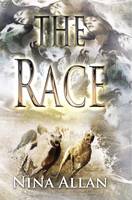
Nina Allan, The Race (2014)

AllanNina Allan is one of my favourite contemporary short story writers; but, as her collections often take on interesting larger shapes, I’ve often wondered what a novel by her would be like. Well, now here’s The Race, and it may just be the best thing Allan has written yet.

We begin in the company of Jenna, who lives in Sapphire, a small southern English town whose main (and pretty much sole) reason for existence is the racing of genetically-enhanced ‘smartdogs’. Jenna makes gloves for the smartdogs’ human runners, which is one of the few bright spots in her life. And her brother Del is pinning his hopes on one last smartdog race, which may yet steer his life in a better direction.

There are some indications that this isn’t the future of our world, but essentially The Race seems fairly straightforward – until we reach the second part and meet Christy, who certainly lives in a recognisable contemporary England, and is the ‘author’ of what we’ve just been reading. Christy has a dodgy brother named Derek, and the temptation is right there to map her life on to Jenna’s, even though it doesn’t quite fit. A third part jumps forward twenty years to a lover of Derek’s partner, and challenges key assumptions from Christy’s narrative. The fourth and final part returns to Jenna’s world, and Del’s grown-up daughter Maree, who was kidnapped as a child… but all may not be as it seems.

The Race is a novel of thwarted lives and limiting horizons: chances are missed, landscapes are washed out, knowledge is incomplete. This is also reflected in the book’s structure and language: its individual parts are integral to each other, yet don’t quite cohere. And rarely come across a novel so finely calibrated to the different weights of realist and science-fictional prose: when Maree’s section includes place names like ‘Thalia’ and ‘Crimond’, their effect is very precisely estranging – just as the world seems to be opening up, so it fades back into obscurity. The Race may end in incompleteness, but its sense lingers on.

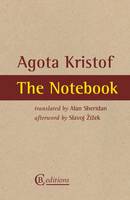
Agota Kristof, The Notebook (1986)
Translated from the French by Alan Sheridan (1989)

KristofTwin brothers are sent from the Big Town to the Little Town to live with their grandmother. With the local school closed, they teach themselves at home: having been given a title, one of the boys will write an account of something that happened to them; the other will check it with a dictionary, and determine whether it is ‘Good’ or ‘Not good’. The criteria for doing this seem simple enough: “the composition must be true. We must describe what is, what we see, what we hear, what we do” (p. 27).

Of course, it’s not that simple; and the reason is right there in that quotation: everything we read is mediated through the boys’ viewpoint – and it’s a viewpoint that distorts a world we may otherwise expect to recognise. The boys eschew words that describe feelings, dismissing them as too vague. They even eschew feelings, undertaking a series of exercises to harden themselves, leading to escalating acts of cruelty – all told in the twins’ direct, matter-of-fact tone. Never again will I use an expression like ‘spare prose’ without thinking; the writing in The Notebook is so austere that it hurts.

Agota Kristof (1935-2011) was a Hungarian writer who became an exile in Switzerland at the age of 21; there, she learned French, which became the language in which she wrote her novels. The Notebook was her first, at least partly inspired by her childhood memories of Nazi-occupied Hungary. But all the geographical and temporal markers are stripped away from the brothers’ world, in sharp contrast to the precision of how they narrate events. The end result is a nightmarish timelessness that’s very hard to shake off. Kristof wrote two more books featuring the twins, which I’m sure I will go on to read one day. But The Notebook is complete in itself, ending in just the right place, ending on an image which is simple and stark, yet – in its own way – impossible to imagine.


© 2026 David's Book World

Theme by Anders NorénUp ↑