It’s time for the third part of my review of Nightjar Press chapbooks (the first two parts are here and here). As before, these are reviewed in the more-or-less random order that I read them.
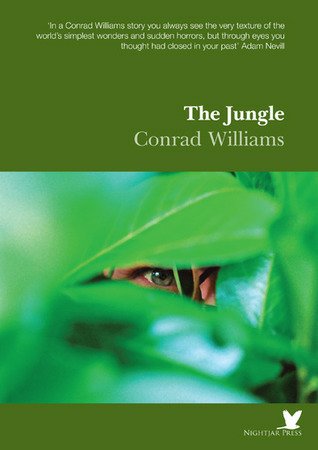
Conrad Williams, ‘The Jungle’ (2013)
Our narrator is an artist who’s working on a jungle scene with no animals; he wants the scene itself to suggest their presence, menace and violence just out of sight. When he’s not painting, he likes to take his two-year-old son Fred to the playground or somewhere; though he’s determined that Fred should not be placed in the way of danger. On this particular outing, the pair pass a man who appears to change into a large animal — and then the jungle continues to encroach.
Conrad Williams is one of my favourite writers working in dark fiction, horror, whatever you prefer to call it. I always feel that he’s in full command of his material, and that’s the case again here. He ramps up the tension, giving ordinary places a sense of looming danger. He also stops in just the right place to cap it off.
Alison Moore, ‘The Harvestman’ (2015)
Earlier this year, I read Alison Moore‘s third novel, Death and the Seaside. As it happens, this story was the foundation for that novel, though it works perfectly well as a piece of fiction in its own right.
Eliot is living on the south coast of England. He owes some rent to his landlord, Big Pete; and also has eyes for barmaid Abbey, Big Pete’s girlfriend. One day, Abbey invites Eliot to the flat above the pub, that she shares with Big Pete. This isn’t likely to end well.
Moore’s story evokes the atmosphere of an off-season, slightly dingy seaside town; but there’s a vein of symbolism running through ‘The Harvestman’ that really enriches the piece. Eliot has long spindly legs that remind him of harvestmen, creatures that disgust him, that can just detach a leg if they get trapped. For different reasons, both Eliot’s father and grandfather lost the use of their legs; the question becomes, can Eliot escape his situation with himself intact? Reaching the answer to this is an intriguing journey.
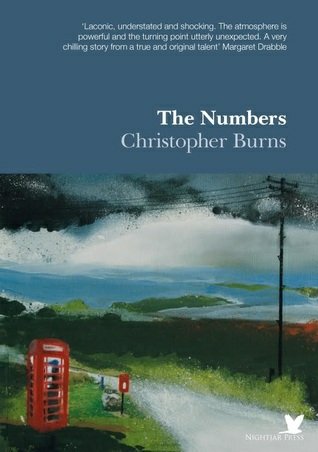
Christopher Burns, ‘The Numbers’ (2016)
One morning, Danny arrives unexpectedly at his family’s farm. He’s not particularly welcome, not after trying it on with his sister-in-law (though as far as he’s concerned, he was picking up on her cues). More generally, Danny is seen as the useless appendage of the family, having sold his share in the farm and being unable to get a job (he was never good with numbers, after all). Still, he is taken in and given breakfast — then it’s down to business.
This is a story of two halves, beginning in a rather subdued fashion (albeit with a definite undercurrent of tension) before turning deftly into something darker, that casts those earlier comments about Danny in a new light. It’s very well done, with such a strong impact.
Book details
‘The Jungle’ (2013) by Conrad Williams, Nightjar Press, 16 pages, chapbook (review copy).
‘The Harvestman’ (2015) by Alison Moore, Nightjar Press, 12 pages, chapbook (review copy).
‘The Numbers’ (2016) by Christopher Burns, Nightjar Press, 16 pages, chapbook (review copy).


 Gabriel arrives in a small Breton town, finds a restaurant, and strikes up a friendship with the owner, José, whose wife is ill in hospital. Gabriel is a good cook and a friendly face, and presently attracts a small circle of friends, including Madeleine, the receptionist of his hotel; and Marco and Rita, a couple also staying there. But he’s also carrying baggage from his past…
 London-based arts critic Alice Robinson is thirty-four, unsure about her place in the world, and haunted by the disappearance of her sister Janey seventeen years previously, when her magazine ‘suspends operations’; taking advantage of her parents’ offer to house-sit for them, she moves back to the suburbs to take stock. Alice’s existence there is enlivened by the arrival of her sixteen-year-old American cousin Emily (who’s been sent over for an improving visit, though she’d rather not be there), and a large dog named Selkirk, whom Alice’s old flatmate Isabel has talked her into looking after (despite Alice’s dislike of dogs). Alice is mostly drifting through life in suburbia when her former editor holds out the possibility of an interview with one of her favourite artists, Karin Ericsson, a recluse who lives on the south coast – could this be the key to Alice’s getting her life back on track?
 The first of our new
  Birds appear again, though in a rather different context, in Nightjar’s other new chapbook.
 These thoughts came to my mind when reading the latest chapbooks from Nightjar Press, which are both short, intense bursts of story. ‘When the Door Closed, it Was Dark’ by Alison Moore tells of Tina, a British girl who has travelled to another country to work as an au pair, and finds it hard to adjust to her new surroundings. There’s a palpable sense of menace about this piece, which comes less from images and individual word choices (though it has its share of striking examples; I love this image from when Tina is trying to understand her host family’s rapid conversation: ‘her formal phrases were like wallflowers at a wild party’), than from details of the broader structure. Tina never learns the family members’ names – they’re just ‘Uncle’ or ‘Grandmother’, and so on – which itself makes them more unknowable to her; but, more than this, the whole piece feels like a closed system. We discover barely anything about Tina’s life before the moment of the story; and the accretion of repeated details – the monotonous food, the outside staircase – heightens the feeling that there’s no escape. Moore’s tale is excellent.
 violent all of a sudden. Our man is reluctant to return, as he thought he’d left his old life behind; but he seems discontent with even his current circumstances. ‘Black Country’ is a story built on shifting sands, as the actual investigation recedes into the background somewhat (though an answer to what’s going on is provided by the end), and the focus is more on the narrator’s emotional state. Lane’s main theme, I would say, is loss – loss of place, and loss of self. There’s a parallel, I think, between the protagonist’s difficulty in getting a handle on his life, and the social and geographical changes being depicted. I feel that those parallels don’t quite have all the breathing-space they need to establish themselves fully, but it’s a very good story and portrait nonetheless.
 The well-known writer is
  Nightjar’s second launch title is the beautifully harsh ‘The Safe Children’ by a young new writer named
Recent Comments