For a while now, I’ve been a reader for Ninja Book Box, a quarterly subscription box and monthly book club focused on small press titles. Today, I thought I’d post reviews of a couple of the books I’ve read for them recently.
Anna Vaught, Killing Hapless Ally
This (semi-autobiographical) debut novel is a vivid portrait of an individual living with mental health problems. Our protagonist is Alison, who intends to do away with Hapless Ally, an alter ego she devised in childhood to be a more acceptable face to show the world – an alter ego that has overshadowed her life ever since.
Killing Hapless Ally is a compelling tour of Alison’s life. We’re immersed in her fraught childhood (her mother would tell Alison that she should have left her to die as a baby, for instance), and discover some of the ways she found to deal with the scars it left throughout her life (for example, Alison has a veritable company of famous imaginary friends, including Shirley Bassey, Albert Camus, and Frida from ABBA).
Though most of the novel is written in third person, we’re firmly viewing things from Alison’s viewpoint. For example, most characters are referred to by nicknames or pseudonyms (Alison’s mother is Santa Maria, a psychiatrist is referred to as Dr Mirror-Neuron, and so on), and the narrative is organised thematically as much as chronologically, whatever suits Alison. These techniques help reshape the novel’s world, bringing us that bit closer to Alison. This is not necessarily a comfortable place to be, but it is thoroughly engaging, sometimes darkly amusing, and ultimately uplifting. Killing Hapless Ally is warmly recommended.
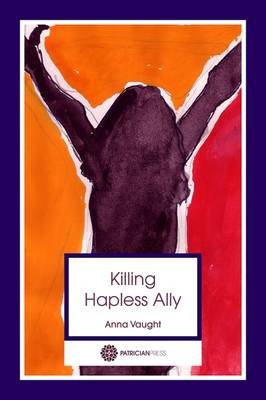
Killing Hapless Ally (2016) by Anna Vaught, Patrician Press, 276 pages, paperback (source: review copy).
Killing Hapless Ally is the choice for this month’s Ninja Book Club.
Tony Peake, North Facing
In 1962, Paul Harvey is at boarding school in Pretoria, South Africa. His English parentage marks him as an outsider, but he’s keen to join the most exclusive club in school: the friendship circle of one Andre du Toit. At first, du Toit appears nothing but a bully, but then he starts to be more friendly towards Paul – and soon Paul finds himself part of du Toit’s group.
Du Toit is known to set the members of his club tasks in order for them to keep their place. Paul’s secret mission is to keep an eye out for anything unusual at the meetings of Mr Spier’s after-school General Knowledge club, write a report for du Toit, and steal whatever he notices. All is not as it seems, however, and the ramifications of Paul’s task can still be felt fifty years later, when he returns to South Africa to face the past.
North Facing is an interesting character study that takes in large events and issues (such as apartheid and the Cuban Missile Crisis) but explores them from a small, personal viewpoint. The key turning points of the plot emerge only gradually, which is a very effective touch. The present-day strand feels a little underplayed, as it turns out to be more of a frame than an equal plot thread. But overall, this quiet-seeming novel is well worth a read.
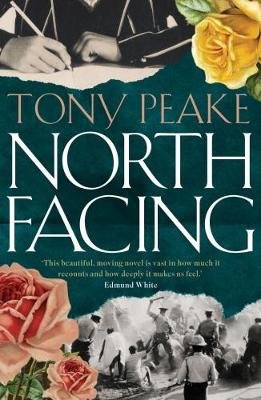
North Facing (2017) by Tony Peake, Myriad Editions, 176 pages, paperback (source: review copy).
 Thirty years hence, when climate change has worn away most of the society we know, Rachel lives alone in an old mill in Cheshire. She has little desire for human contact, avoiding the nearby communes, but does make the odd trip to the market for supplies. It’s there where Noah, a trader, invites Rachel to meet up later (it seems to hesitant to be called a ‘date’). She agrees, but finds not Noah waiting for her at the local pub, but a man named Jez White, who claims to be a friend of Noah’s. White appears more and more in Rachel’s life, and we see from pages of his journal that he’s had an eye on her for some time – but Rachel is on her own search for the truth about Jez White.
 In Victorian England, Rullie Montrose is a plant hunter, who travels the world in search of newplant specimens to bring back to Kew or his own garden. In this short novel by Caroline Cass, he heads to the Himalayan kingdom of Hunza, said to be the home of one of the rarest of all flowering plants. When Rullie reaches his destinations, he learns from Hunza’s ruler, Zafran Khan, that the kingdom has no such plant. But it does have delicious apricot trees, a few seedlings of which Khan is prepared to give Rullie – in exchange for all his gold. Rullie returns to Hunza several times over the next few years – for more apricots, yes, but he has also taken a shine to Zafran Khan’s young daughter.
Recent Comments